

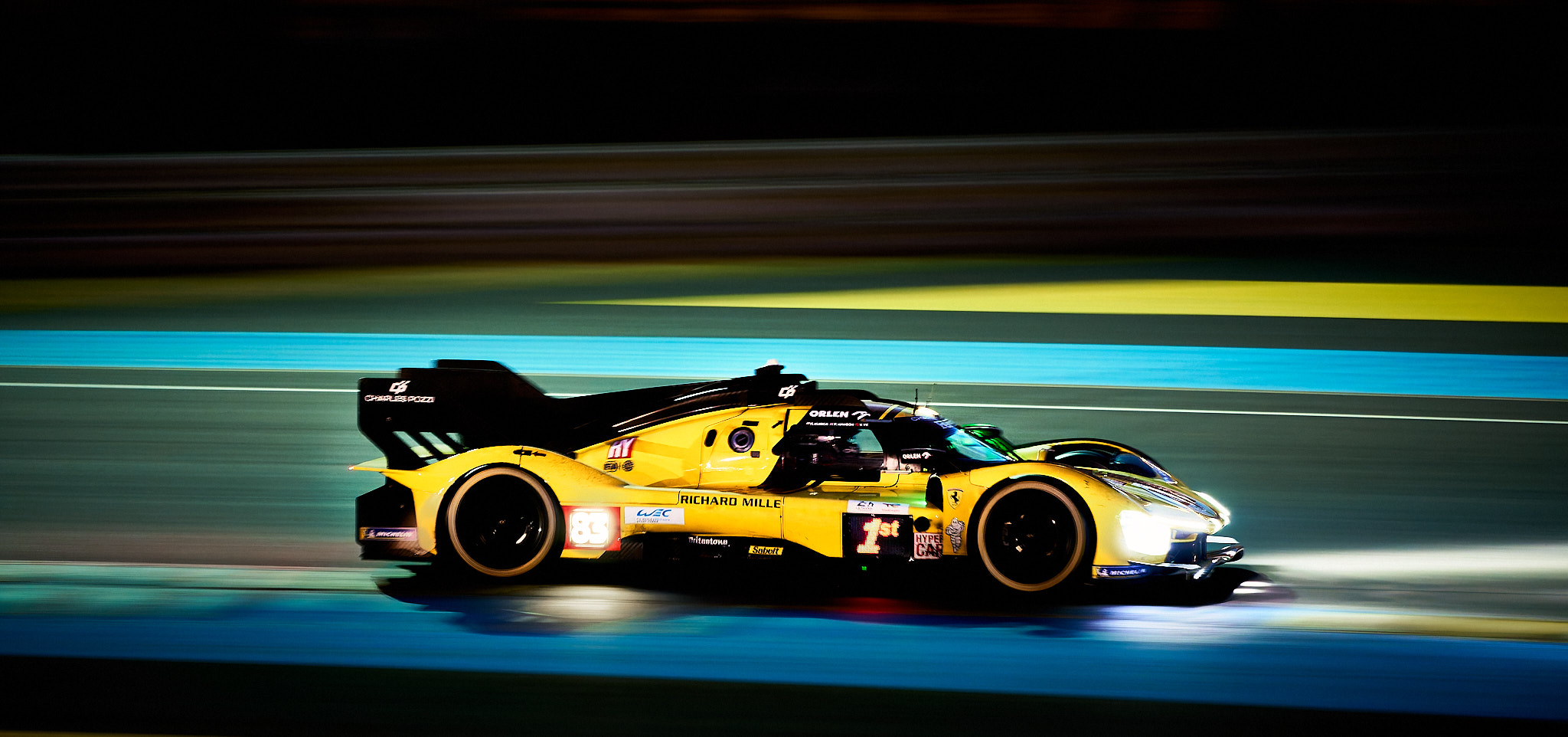
Behind the Lens at Le Mans 2025
The 24 Hours of Le Mans is unlike any other motorsport event. It’s a marathon for the drivers, the teams, and — it turns out — for anyone trying to photograph it.
What follows isn’t a guide to covering the race. It’s what I learned trying to come home with a few frames I was actually proud of.
Preparation is Everything
Without trackside access, the work starts before the race does. I spent the days leading up to the start walking the public sections of the circuit, working out which fences had the cleanest gaps, where the catch fencing thinned out, and where the sun would be at the times I wanted to shoot. The Porsche Curves, the run down to Indianapolis and Tertre Rouge became the spots I kept coming back to. I will note though, that it’s a totally different place altogether once the fans roll in, with many sections being totally inaccessible due to avid motorsports fans being packed in like sardines, with camping chairs almost sharing arm rests.
A long lens does a lot of the heavy lifting when the closest you’ll get is a fence post. So does patience — most of my better frames came from picking one corner and staying there for an hour rather than wandering. There were 24 hours of racing after all, so you can afford to camp out for a while and take it all in, and get the most out of an area. It’s astonishing how much more you see once you’ve settled in one place for a bit.
I always try to create a detailed shot list before a race weekend — the cars I want to isolate, the lighting conditions I want to hit, specific corners at specific times of day. It lasted about four hours. The sheer scale of Le Mans makes it almost impossible to stick to a plan. You hear a prototype screaming out of a corner you hadn’t even considered, or the light does something unexpected off the tarmac, and suddenly you’re chasing that instead. By the time night fell I’d abandoned the list entirely and was just reacting. In hindsight, a looser plan with a few non-negotiable shots and the rest left open would have served me much better.
Light You Don’t Get Anywhere Else
What makes Le Mans special is that the race rolls through every lighting condition you can think of. Hard midday sun, the gold of late afternoon, the long blue minutes before the floodlights take over, then headlights tearing through the dark, another golden hour at sunrise (if you’re lucky). This year was mainly hard sun. Don’t think I’ve ever been as hot as I was during the days leading up to the event.
Night was the hardest. High ISO, slow shutter for movement, and constantly resetting expectations about what’s actually going to come out sharp. A lot of frames didn’t. The ones that did felt earned.
The Long Hours
Somewhere around 2am, the adrenaline that had been carrying me since the start just switched off. I was sat on a kerb near Indianapolis with a lukewarm coffee, listening to the cars come through in the dark, and I genuinely considered packing it in for the night. I didn’t, but only because I knew I’d be annoyed with myself in the morning.
The rest of the night was a loop: walk to a section, shoot for twenty minutes, sit down, eat something, move on. I’d planned rest breaks but never quite took them properly — there was always one more car, one more lap, one more attempt at getting a clean slow-shutter shot. By sunrise I was running on fumes. Not sure how many miles I’d covered on foot, but I’ve been less tired after a 5k run.
he thing nobody tells you is that the mental fatigue hits harder than the physical. Simple tasks start taking real effort — packing my rucksack between sections felt like a puzzle I couldn’t solve, and I’d stand there for far too long working out which hand to hold a lens in while changing over. I made silly mistakes with the camera that I’d never normally make. Knowing when to put the camera down for ten minutes turned out to be just as important as anything technical.
What I’m Taking Away
I came back with a handful of images I’m genuinely happy with and a much longer list of things I’d do differently. Better preparation for the night sections — more water, fewer coffees. Less time chasing every car, more time waiting for one. And — eventually — I’d love to come back as a fully credentialed photographer.
If you’ve shot Le Mans, or any race, from the spectator side and figured out something I missed, drop me a line.